

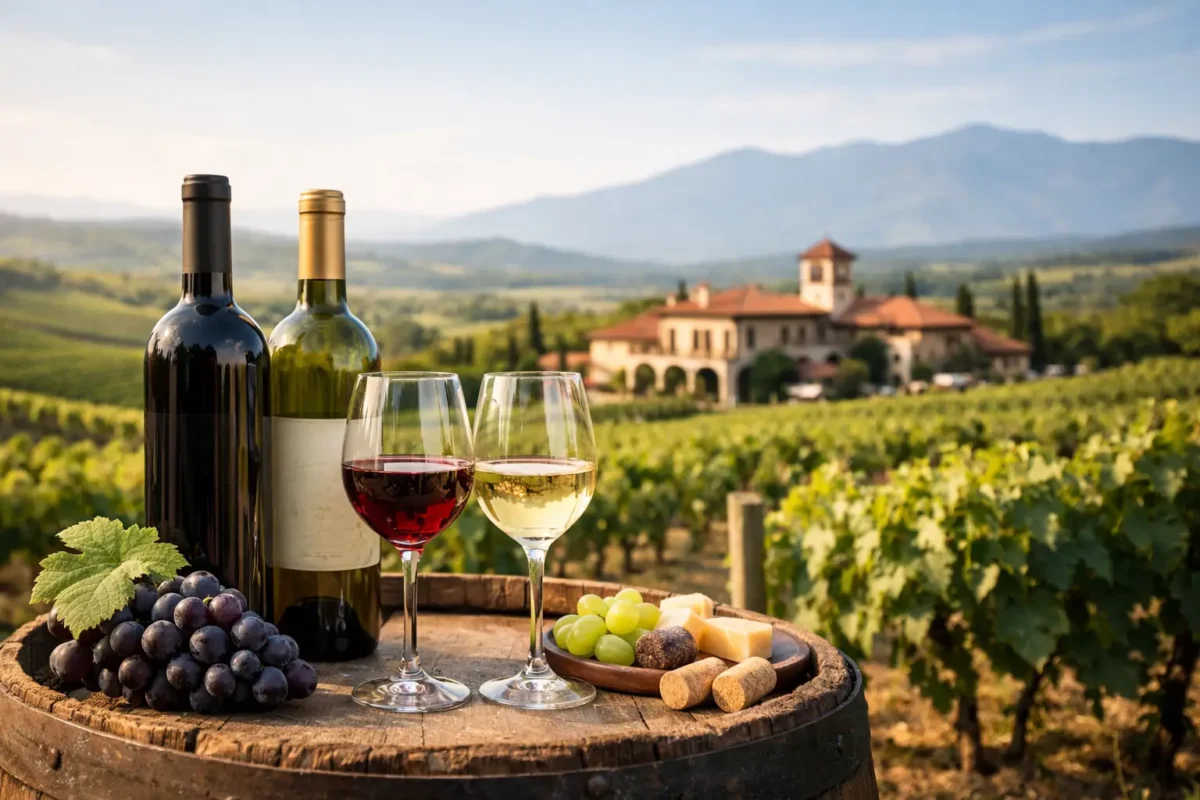
A wine list does not need another predictable red. It needs a bottle that earns a second look, starts a conversation, and delivers on the glass what the label promises. That is where estate grown Bulgarian wine enters with unusual strength – rooted in ancient land, shaped by a singular climate, and carried by a story most of the US market has barely begun to tell.
For retailers, sommeliers, and import buyers, the appeal is not novelty for novelty’s sake. It is substance. Bulgaria offers one of Europe’s oldest wine cultures, yet it still feels fresh in a market crowded with familiar regions. When that wine is estate grown, the proposition becomes even sharper. Origin is clearer. Quality control is tighter. The connection between vineyard, cellar, and finished bottle is far more direct.
What estate grown Bulgarian wine really signals
The phrase matters because it says something precise about provenance. Estate grown Bulgarian wine begins with grapes cultivated on vineyards tied directly to the winery itself, rather than assembled from scattered outside sources. That does not automatically make every bottle better, but it does create a stronger line between place and taste.
For serious buyers, that distinction has weight. Estate fruit allows a producer to shape farming decisions around style, consistency, and long-term vineyard health. It also gives the finished wine a more coherent identity. In a category where storytelling can sometimes outrun substance, estate-grown sourcing brings credibility.
This is especially compelling in Bulgaria, where heritage is not a marketing invention layered onto a young region. The country’s winemaking lineage reaches back thousands of years to the Thracians, whose bond with vine and ritual still echoes through the land. In the Thracian Valley, that history is not abstract. It lives in the terrain, the sun, the soils, and the rhythm of viticulture passed from generation to generation.
Why Bulgaria feels new, even with 5,000 years behind it
The US market knows how to place Bordeaux, Napa, Tuscany, and Rioja. Bulgaria occupies a different space. It carries the authority of Old World wine, but without the overexposure that can flatten discovery into routine. That gives buyers an advantage.
A strong Bulgarian red can satisfy guests who want structure, depth, and food-friendly balance, while also offering the pleasure of finding something beyond the expected map. For a retailer, that means a shelf story with distinction. For a restaurant, it means a by-the-bottle selection that can energize a list. For a distributor, it means a category with room to grow rather than one already crowded with lookalikes.
There is, of course, a trade-off. Bulgaria still requires context in the US. A bottle from a famous French appellation may sell itself faster because the region is familiar. Bulgarian wine often needs a better hand-sell, a stronger placement, or a sharper narrative from staff. Yet that extra effort can produce stronger engagement precisely because the customer is discovering, not merely repeating a habit.
The Thracian Valley and the pull of place
Not every Bulgarian wine tells the same story. The Thracian Valley, in particular, has become essential to understanding the country’s premium reds. Warm days, cooling influences, and a long growing season help produce wines with ripeness and concentration, while preserving enough structure to keep them composed rather than heavy.
That balance matters in the current market. Many buyers want red wines with depth, but not jammy excess. They want texture and presence, yet still value lift, freshness, and a sense of place. The Thracian Valley answers that desire well. It can deliver polished fruit, layered spice, and grounded tannin with an Old World frame.
Estate-grown fruit from this region tends to show that character more clearly. When farming and cellar decisions are aligned from the same source, the wine often feels less generic and more specific. It tastes less like a style manufactured for broad approval and more like a region speaking in its own voice.
Estate-grown reds give buyers a clearer proposition
For trade audiences, clarity matters almost as much as quality. A premium bottle needs a reason to exist in a portfolio. Estate grown Bulgarian wine offers one because it combines three things buyers are actively seeking – provenance, differentiation, and premium presentation.
Provenance matters because modern buyers, whether wholesale or consumer, are increasingly attentive to source. They want to know where the grapes came from and why that place matters. Differentiation matters because lists and shelves are crowded. A wine with ancient regional identity and estate credentials stands apart more easily than another interchangeable red. Premium presentation matters because the bottle has to signal confidence before it is ever opened.
This is where Bulgaria’s red wines are especially persuasive. A focused estate portfolio built around varieties such as Mavrud, Merlot, and a well-shaped blend can meet different entry points of familiarity. Merlot offers a known reference. A select blend offers versatility. Mavrud offers a rare and memorable signature.
Why Mavrud gives estate grown Bulgarian wine its edge
If there is a grape that captures the deeper promise of Bulgaria, it is Mavrud. It is not as instantly recognizable as Cabernet or Pinot Noir, and that is part of its value. For buyers who want a bottle with regional authenticity rather than international sameness, Mavrud has gravity.
At its best, it brings dark fruit, spice, earth, and structure with a firm, noble bearing. It can feel both ancient and refined, powerful yet disciplined. In estate-grown form, that identity becomes even more compelling because the wine is less likely to be smoothed into a generic profile. It keeps its accent.
That said, Mavrud is not always the right first step for every account. Some retailers and beverage programs may do better introducing Bulgarian wine through Merlot or a blend before leading customers toward indigenous varieties. It depends on the clientele, the staff confidence, and the role the wine needs to play on the shelf or list. Discovery works best when it is paced well.
The commercial value of a stronger story
There are plenty of good wines in the world. Fewer have a story that feels both elevated and believable. Estate-grown sourcing gives Bulgarian wine that advantage because the narrative is anchored in land, not just language.
A buyer can speak about the Thracian Valley, ancient winemaking roots, estate vineyards, and a focused red portfolio without sounding forced. The pieces fit. That coherence is useful in sales. It helps staff remember the talking points. It helps consumers justify a premium purchase. It helps a portfolio feel curated rather than random.
For restaurant programs, this kind of wine can create a memorable table moment. Guests often respond well to bottles that come with a sense of origin and discovery, especially when the wine itself delivers polish and depth. For retailers, it creates a hand-sell opportunity with more texture than another safe label from a saturated category.
For wholesalers and import buyers, the advantage is broader. A well-positioned estate Bulgarian red can help define a portfolio as discerning rather than conventional. It signals that the buyer is looking beyond the usual routes and finding regions with both quality and room to grow.
Where estate grown Bulgarian wine fits now
The strongest position for these wines is premium but approachable. They are not everyday anonymous reds, nor are they so esoteric that they belong only in niche placements. Their sweet spot sits with buyers and drinkers who appreciate heritage, craftsmanship, and the pleasure of finding something distinctive before it becomes commonplace.
That is why the category deserves attention now. American wine culture has matured beyond simple country recognition. More buyers are willing to follow provenance, grape identity, and estate credibility if the wine rewards the leap. Bulgaria, especially through estate-rooted red wines from the Thracian Valley, is ready for that moment.
Rhesus Wine speaks to this opportunity with unusual focus – not by trying to represent everything, but by presenting a refined expression of what this land does best. Taste the land. Feel the legend.
The best bottles do more than fill a gap in a program. They give people a reason to remember where they were, what they ordered, and why this wine felt different from the start.